

Debra Fileta’s Soul Care frames burnout as the body’s stop‑signal and calls believers to tend the temple of the Holy Ghost (1 Corinthians 6:19–20). She gathers six rhythms—physical care, rest, community, boundaries, presence, and insight—so readers move from awareness to sustainable habits after the pattern of Jesus, who rested, set boundaries, and stayed on mission.
This book…
Equips readers to resist burnout with biblical soul care for embodied servants.
- Why this matters: Burnout reveals beliefs that sabotage faithful soul stewardship.
- Who it’s for: Pastors and ministry workers who outpace limits and need rhythms.
- Between the lines: Doctrine stays practical, not systematic, throughout.
- At a glance:
- Pages: 224
- Published: 2024
- Genre: Counseling
- Difficulty: Accessible
- My Rating: 4.5/5
Rhythms of Soul Care that Keep You Whole
While counseling pastors, I noticed a troubling pattern: burnout victims blamed everyone but themselves. They overlooked their own stewardship of bodies and souls. Others may contribute to exhaustion, but you must first examine how you keep your own soul. After hearing Debra Fileta on a podcast, I recognized Soul Care would serve my planned series, Keeping Temple, on living within God-given limits for healthy service.
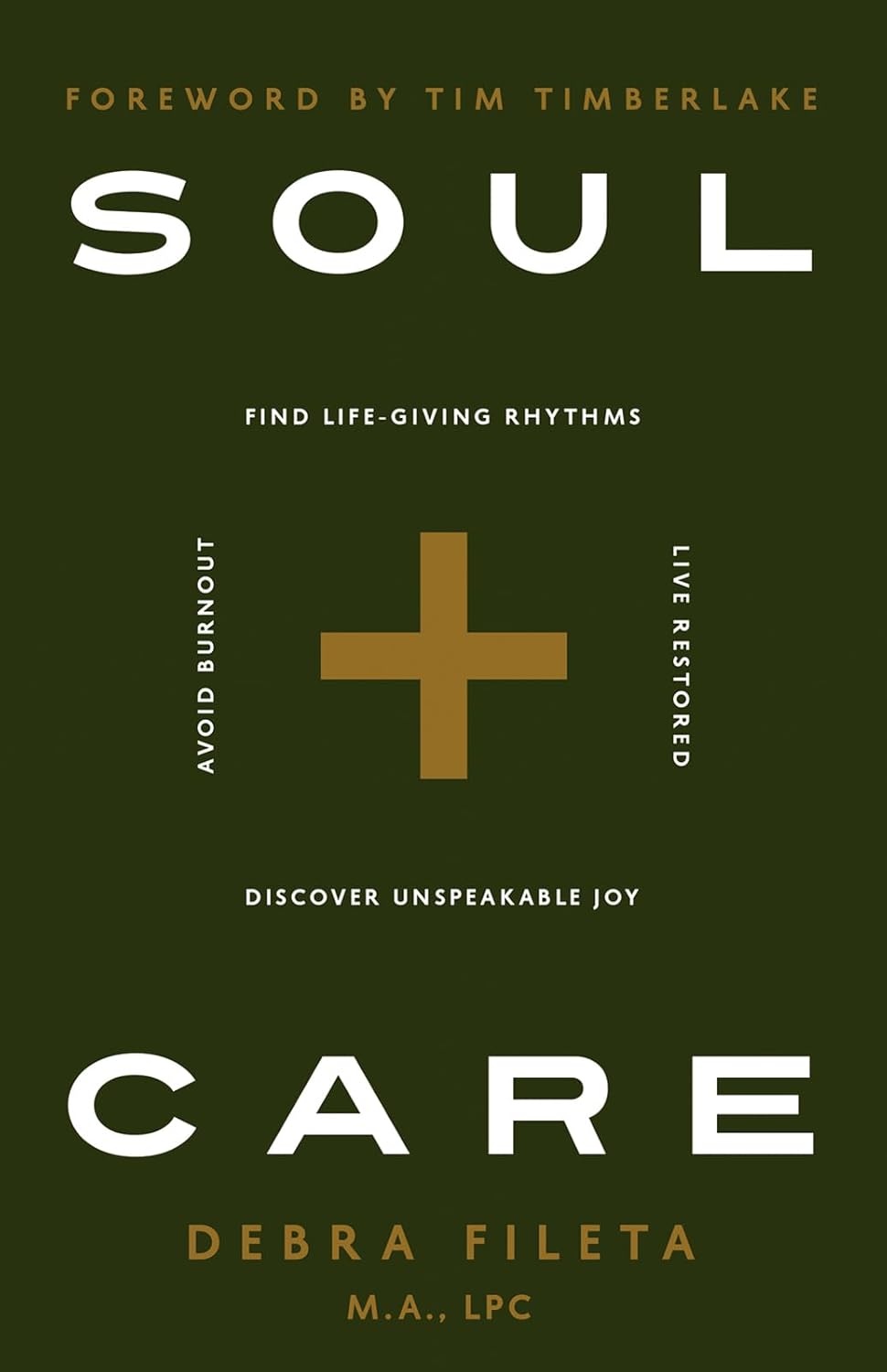
Structure
Fileta presents Soul Care as a journey from diagnosis to prescription. Part one reframes self-care as soul care rooted in temple stewardship. She exposes false beliefs and rejects coping strategies that numb rather than heal.
The middle sections group practices into three domains. Physical rhythms cover nutrition, hydration, and movement. Rest rhythms address sleep and pacing at roughly eighty-five percent capacity. Relational rhythms explore friendship and gospel community.
Next, she turns to protection through boundaries around time, emotions, and calling. She filters obligations by obedience rather than approval. The closing chapters press into presence and gratitude. Then she introduces insight work that identifies lies, names triggers, and applies simple triage for the whole person. Throughout, the book progresses from diagnosis to theology to habits, grounding care in faithful obedience and sustainable ministry.
Evaluation
The argument rests on the body as the temple of the Holy Ghost—a stewardship mandate from 1 Corinthians 6:19-20. Scripture anchors every call to action. Believers must keep their “heart with all diligence,” because “the issues of life” flow from it (Proverbs 4:23). God gives “power to the faint” and renews those who wait on Him (Isaiah 40:29–31).
Christ offers life “more abundantly,” not as indulgence but as ordered fullness (John 10:10). Fileta models Jesus’s humane pace and boundary-keeping without denying His divinity. She distinguishes soul care from self-care by rooting practice in worship and service. Psychological insights appear as handmaids, not masters. Prosperity promises are absent. Doctrine remains practical rather than systematic, yet Fileta treats themes of creation, incarnation, sanctification, and hope with clarity and reverence.
Treating the body as a temple reframes care as obedience rather than indulgence, and Jesus’s pattern grounds boundaries, rest, and emotional honesty.
Strengths
Soul Care weds Scripture and practice with warmth. Treating the body as a temple reframes care as obedience rather than indulgence. Jesus’s pattern grounds boundaries, rest, and emotional honesty. Integration is a hallmark throughout the book. Physical rhythms and sleep connect to spiritual health without collapsing one into the other.
Emotions are signals, not verdicts. Readers learn to respond rather than react and to replace lies with truth through Scripture. The six rhythms form a coherent system. The eighty-five percent pacing principle offers a workable alternative to the burnout cycle. Fileta writes accessibly, using concrete examples, questions, and exercises. She moves readers from awareness to action.
Cautions
Readers wanting deeper theological development of embodiment or the imago Dei will find the treatment introductory. Citations to peer-reviewed research are sparse, limiting avenues for verification and further study. The six-rhythm framework can become prescriptive if applied rigidly rather than prayerfully. Discerning which domain to address first may prove difficult for the overextended.
Insights arise from clinical counseling and excel in individual care. However, guidance on systemic problems—such as toxic cultures, unrealistic ministry loads, and structural barriers—remains thin. The book assumes some agency and resources. Readers facing chronic illness, financial strain, or heavy caregiving may need adaptation. Suffering and lament receive brief attention compared to flourishing and may require supplementation for those in prolonged trials.
Quotations
- “Burnout is the body’s way of crying out for us to pay attention. It’s the SOS signal from our nervous system telling us to stop and care for ourselves.”
- “Human beings are finite. We have limits, confines, and capabilities. When we exceed our capacity, we start to feel it.”
- “Emotions are real, but they aren’t always true.”
Takeaways
Begin with honest capacity. Aim to operate at roughly 85 percent, building in a margin for interruptions as Jesus withdrew to rest. Guard sleep as trust in God’s care, seeking eight hours. Remember, “I will both lay me down in peace, and sleep: for thou, Lord, only makest me dwell in safety” (Psalm 4:8).
Triage your soul weekly across the six rhythms—physical care, rest, community, boundaries, presence, and insight. Choose one concrete step in the weakest domain. Practice daily emotional check-ins for five to ten minutes, treating feelings as signals and answering them with Scripture. Resist isolation by initiating a meaningful community. Prioritize mutual growth over busyness. These practices honor God’s temple and position servants to minister from fullness, not depletion.
Conclusion
Soul Care offers a biblical pathway from burnout to sustainable rhythms. Fileta grounds physical, relational, and emotional practices in temple stewardship. She anchors care in Scripture and Jesus’s pattern. She integrates body and soul without collapsing distinctions. Her six rhythms form a workable, concrete system. Yet the book assumes agency that readers may lack, and it gives systemic barriers limited attention.
Start with one rhythm where you are weakest—likely rest or boundaries—and build one habit this month. Treat your body as the temple of the Holy Ghost. Pace at 85 percent capacity and guard margin for interruptions, as Jesus did. I will use Soul Care to frame my Keeping Temple series and to coach pastors who mistake depletion for devotion. Fileta writes with warmth, roots care in worship, and equips servants to minister from fullness rather than fumes.
Related Material
- Heart Transformation, One Word at a Time — habit-level focus to sustain change
- One Word, Whole Life: A Year of Focus — simple annual constraint for rhythm
- Balanced Leadership in a VUCA World — upper and lower bounds to prevent exhaustion
