Where is the line between faithful contextualization and dangerous syncretism in missionary church planting?
Contextualization: Removing Cultural Barriers
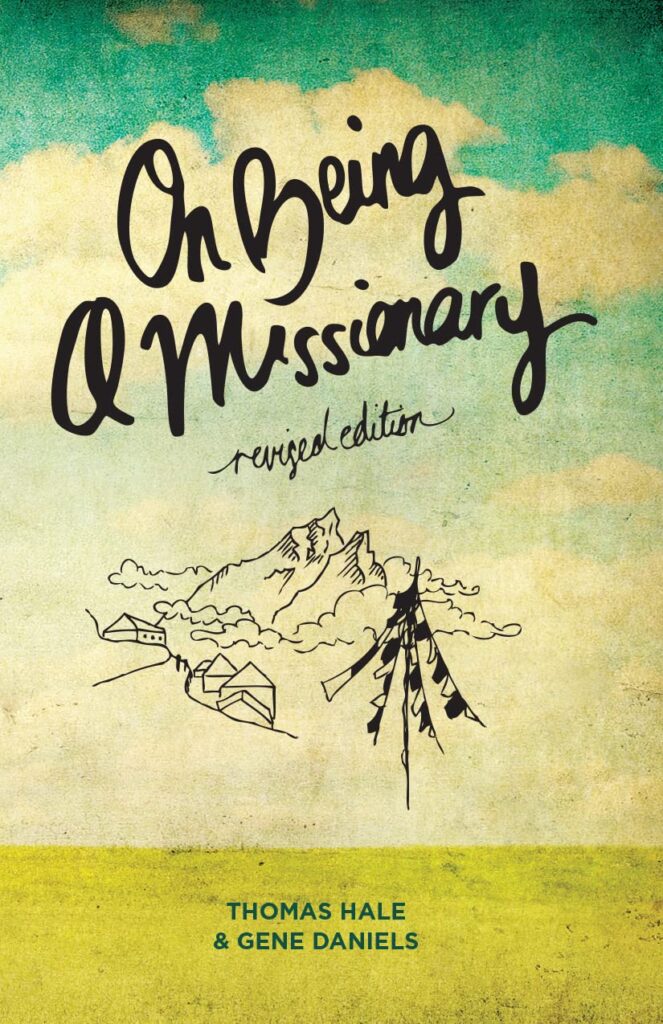
Thomas Hale defines contextualization as the effort “to remove all unnecessary cultural barriers that might keep people from turning to Christ” (On Being a Missionary, ch. 6). When missionaries plant churches in new cultures, they should retain every element that does not contradict Scripture. This approach allows the gospel to take root in familiar soil rather than in imported forms.
Syncretism: The Danger of Compromise
Yet Hale warns against syncretism, which he describes as “the mixing of gospel and culture…in such a way that the gospel itself is changed” (On Being a Missionary, ch. 6). Faithful contextualization helps people understand the gospel by filling familiar concepts with biblical meaning. Syncretism, by contrast, adjusts biblical truth to preserve cultural comfort.
“Removing needless offense is good; removing the offense of the cross is betrayal.”
The Cost of True Discipleship
Hale exposes a subtle temptation: some missionaries use contextualization language to make discipleship easier. He counters that “the way of discipleship is never easy, and we do [a] disservice to the cause of Christ if we seek to make it such” (On Being a Missionary, ch. 6). Removing needless offense is wise. Removing the offense of the cross is betrayal.
Paul understood this tension. He declared, “God forbid that I should glory, save in the cross of our Lord Jesus Christ” (Galatians 6:14). The cross remains offensive to human pride across cultures. Missionaries must constantly ask whether a proposed adaptation removes a stumbling block of culture or the stumbling block of the cross. The former belongs to wise contextualization; the latter belongs to compromise. The Holy Spirit uses both clarity and costliness to form genuine disciples.
Faithful missionaries labor to translate the gospel into local forms while refusing any adaptation that dulls the sharp, saving edges of Christ’s call to costly discipleship.
Disclaimer: Information in my “slip-box” doesn’t necessarily reflect my agreement with the source or all its content. Recording diverse perspectives helps strengthen one’s position beyond the echo chamber of like-minded thinkers. By documenting alternative viewpoints, we engage in the intellectual wrestling match that ultimately deepens our understanding.
I aspire to post one note from my “slip-box” every weekday. If you want to learn more about how to work with knowledge, click this link: What is knowledge management?
Pastor Dan Patrick, raised in Northern Virginia near Washington, D.C., holds both a Bible degree and a Master’s of Divinity. He has ministered across five states from coast to coast, serving in various capacities, including pastoral leadership. Dan’s primary mission is to help people love God’s Word and find their purpose in God’s work.